
Engineering / Physics modelling

Build models that explain system behaviour.

Physics based and reduced order modelling for design exploration, controls, digital twins and predictive applications. Models are selected and validated according to their intended decision authority.

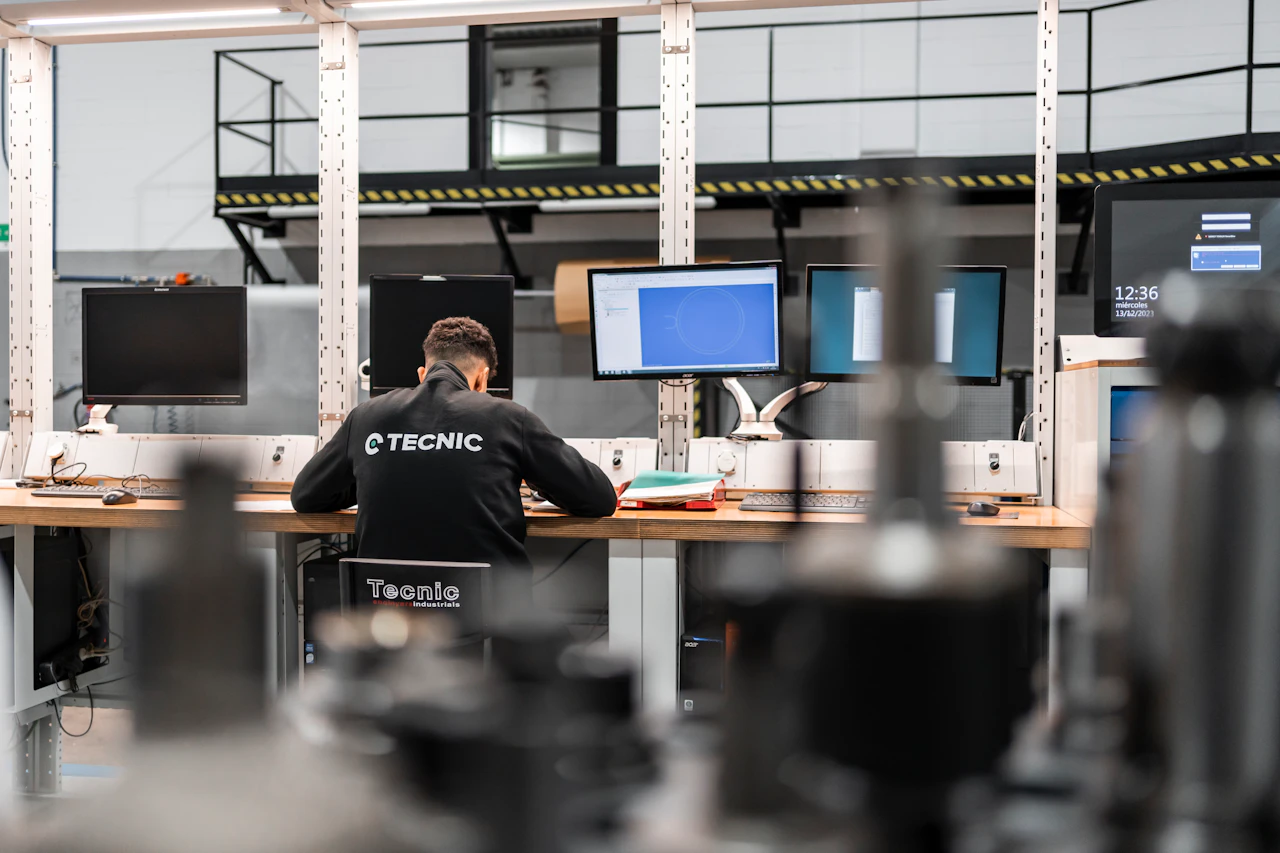
Engineers calibrating a sensor rich physical test system against computational models
Physics based modellingBehaviour made measurable

Service overview

Preserve the governing engineering relationships while achieving the speed and fidelity required by the use case.

Physics based and reduced order modelling for design exploration, controls, digital twins and predictive applications. Models are selected and validated according to their intended decision authority.

Service model
Use focused specialist support for a defined gap, or assemble a multidisciplinary team around a complete workstream. The structure follows the interfaces and decisions in the scope.
Delivery
Choose a project, dedicated team, hybrid engagement or managed service. Milestones, client responsibilities and acceptance criteria are agreed before execution.
Control
Scope, assumptions, evidence, ownership and review rhythm remain visible. Changes and unresolved risks are recorded with an accountable decision owner.
01 / Required inputs
  • Governing relationships and states
  • Parameters and excitation cases
  • Calibration and reference behaviour
02 / Working methods
  • System dynamics
  • Modelica style modelling
  • Reduced order methods
03 / Evidence produced
  • Model formulation and units
  • Numerical and parameter evidence
  • Validity range and integration contract
04 / Connected disciplines
  • Simulation and CAE
  • Digital twins
  • AI and automation
Lifecycle positionPurpose

Define the decision and required model authority.

Core capabilities

Capabilities included.

Each capability explains the work itself, how it connects with the surrounding product or operating system, and the evidence needed to make the result usable.

01

System modelling

Represent interacting mechanical, thermal, fluid, electrical and control behaviour.

Practical coverage

Create a system level view across subsystem boundaries.

Talk to CX24
02

Reduced order models

Derive faster representations from detailed simulation or measured behaviour.

Practical coverage

Enable rapid exploration and runtime applications.

Talk to CX24
03

Co simulation

Connect domain models through controlled interface and time coupling logic.

Practical coverage

Study cross domain system behaviour without hiding interfaces.

Talk to CX24
04

Parameter estimation

Calibrate uncertain model parameters against measured or reference data.

Practical coverage

Separate model form error from uncertain inputs.

Talk to CX24
05

Surrogate modelling

Create computationally efficient approximations across defined design spaces.

Practical coverage

Accelerate optimisation while making validity limits explicit.

Talk to CX24
06

Physics informed AI

Combine governing constraints and data driven learning for prediction.

Practical coverage

Retain engineering review, uncertainty and validation controls.

Talk to CX24

Delivery model

How we deliver.

Engineering work begins with the decision that must be supported and the evidence required to make it responsibly. Requirements, interfaces, assumptions and validation authority stay visible throughout delivery.

01

Inputs we establish

Product requirements, operating conditions, geometry, interfaces, existing test evidence, standards and release constraints.

Missing or uncertain inputs are recorded with an owner and their effect on model or design authority.
02

How the team works

An accountable engineering lead coordinates the mechanical, simulation, electronics, embedded or digital specialists required.

Client technical owners remain connected through design reviews, issue decisions and agreed approval gates.
03

How work is controlled

Models, calculations, software, drawings, assumptions, interfaces and changes are reviewed at defined maturity points.

Each output states its purpose, limitations, validation status and the next decision it is intended to support.
04

How success is measured

Requirement coverage, technical risk retirement, interface closure, evidence quality and readiness for the next lifecycle stage.

Progress is reported through accepted engineering outputs and resolved decisions, not activity volume alone.

Solutions

Solutions for common delivery needs.

The starting point can be a technical problem, a capacity gap or the need for a complete delivery workstream. CX24 first clarifies the current state, desired outcome and decision ownership.

01

Detailed simulation is too slow for design exploration.

How CX24 respondsDefine the decision and required model authority. The scope, responsible owners and evidence needed for closure are agreed before execution begins.
02

Controls development needs an executable plant model.

How CX24 respondsSelect states, physics, assumptions and interfaces. The scope, responsible owners and evidence needed for closure are agreed before execution begins.
03

A digital twin requires a validated runtime representation.

How CX24 respondsEstimate parameters against relevant evidence. The scope, responsible owners and evidence needed for closure are agreed before execution begins.
04

Data is limited and physical relationships must guide prediction.

How CX24 respondsTest accuracy, robustness and limits. The scope, responsible owners and evidence needed for closure are agreed before execution begins.

Delivery approach

A clear path from scope to evidence.

The exact gates change by service, but ownership, review and measurable outputs stay explicit. Each stage establishes the information needed to enter the next one responsibly.

01

Purpose

Define the decision and required model authority.

Stage outcomeModel specification is prepared or updated before the work advances.
02

Formulate

Select states, physics, assumptions and interfaces.

Stage outcomeExecutable model is prepared or updated before the work advances.
03

Calibrate

Estimate parameters against relevant evidence.

Stage outcomeCalibration evidence is prepared or updated before the work advances.
04

Validate

Test accuracy, robustness and limits.

Stage outcomeValidation record is prepared or updated before the work advances.
05

Deploy

Package the model with monitoring and version control.

Stage outcomeAgreed next stage evidence is prepared or updated before the work advances.

What you receive

Typical deliverables.

Deliverables are adapted to the client environment and agreed acceptance criteria. The aim is to leave behind usable engineering, technology or operating capability, not presentation material alone.

01

Model specification

Purpose, variables, equations, assumptions and validity range.

Assumptions, ownership, dependencies and the agreed review status are recorded with the output.
02

Executable model

Versioned model implementation and interfaces.

Working files, source information and revision status are organised so the client team can continue using them.
03

Calibration evidence

Data, parameter estimates and residual analysis.

Results include the relevant checks, open issues, limitations and approval evidence, not only the final conclusion.
04

Validation record

Accuracy, limits, uncertainty and deployment controls.

Final handover identifies accepted scope, residual risk, next actions and the accountable owner for each action.
Technology and methods
System dynamicsModelica style modellingReduced order methodsScientific PythonOptimisationPhysics informed ML
Proof Points

Evidence clients can review before acceptance.

Proof is defined through the engagement itself: accepted outputs, a visible decision trail, agreed measures and a usable handover.

01

Accepted outputs

Deliverables are mapped to agreed criteria, version status, accountable owners and review decisions.

02

Decision trail

Inputs, assumptions, interfaces, changes, exceptions and approvals remain connected to the work.

03

Delivery measures

Progress, quality, risk, backlog or service measures are selected for the actual engagement.

04

Usable continuity

Working files, source information, runbooks and handover actions leave the client able to continue.

Client names, project details and outcome claims are published only with permission. Evidence for a specific engagement is confirmed through the agreed scope, reviews and acceptance records.

Engagement Models

Choose a delivery structure that fits the responsibility.

Team shape, governance, commercial structure and acceptance are matched to the outcome CX24 is asked to deliver.

01

Defined project

Bounded scope, milestones, deliverables and acceptance criteria for a specific outcome.

02

Dedicated team

Stable specialist capacity integrated with client leadership, standards and delivery rhythms.

03

Delivery centre

Multidisciplinary capacity with named governance, shared methods and transparent reporting.

04

Managed service

Recurring responsibility operated against controls, service levels and improvement measures.

Build · Enable · Operate

Bring the requirement.
We will help define the right delivery structure.

Talk to CX24